Chilled delivery with gel ice packs · Free HCMC delivery over 5,000,000 VND

Bean to bar, by hand

Every D'art bar starts as a cacao pod on a Vietnamese farm and ends as chocolate finished in our Sài Gòn atelier. Here's the journey in between.
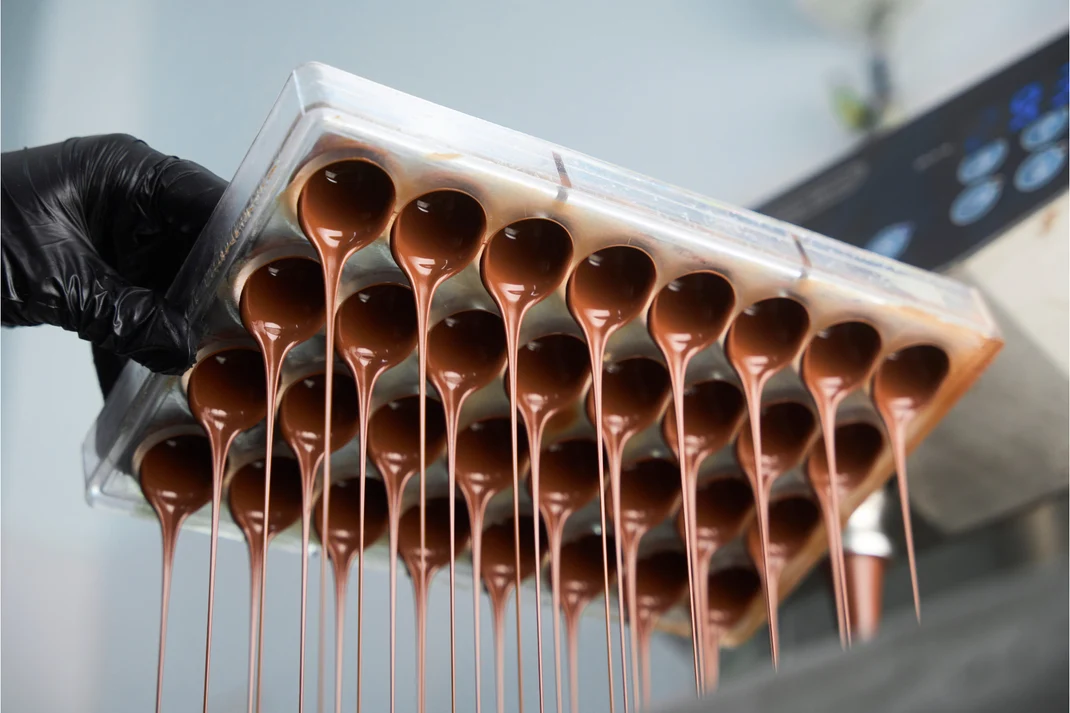
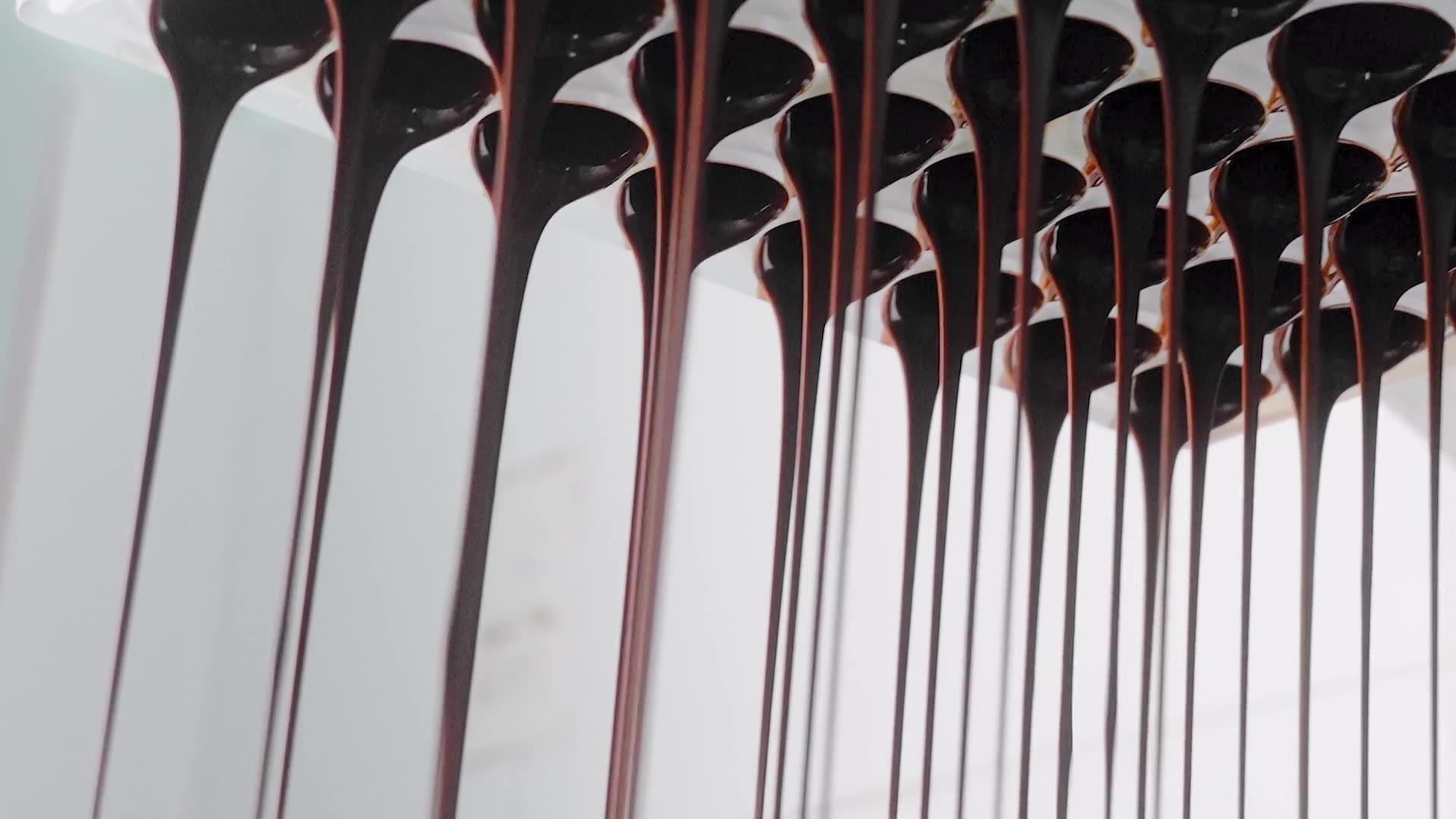
A gloved hand lifting a polycarbonate bonbon mould, tempered chocolate draining from every cavity in long threads
Casting the shells. Excess chocolate drains back out, leaving a shell under a millimetre thick.
Watch

From the grove to the bar, in three minutes

Filmed across our plantations, the fermentation sheds and the workshop in Sài Gòn.

The process

Seven steps from pod to piece

Process detail to confirm with the chocolatier [verify]

1

Whole pods, cut ripe

We buy the fruit, not someone else's beans — from our own farm and from growers we know by name, province by province.
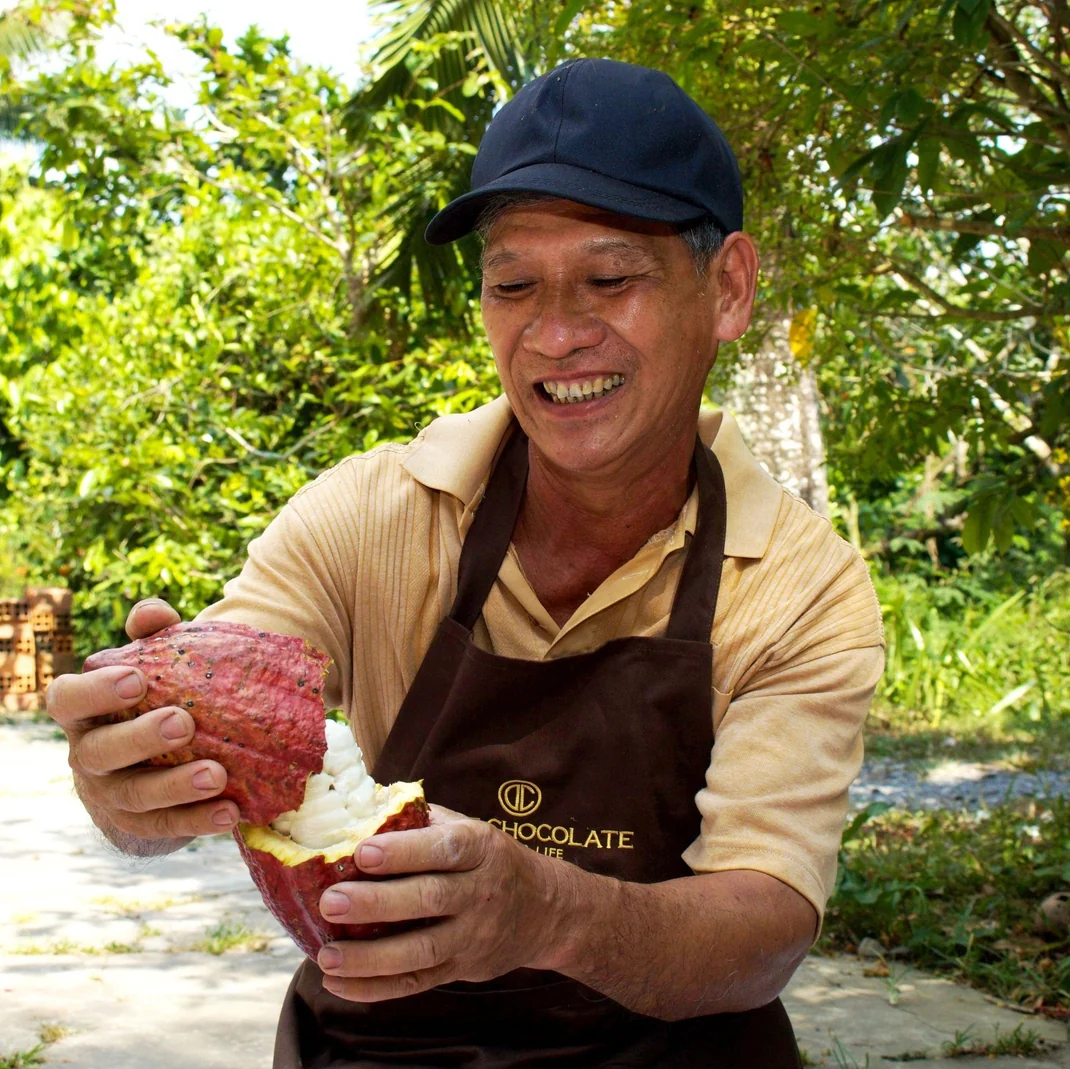
Splitting a fresh cacao pod open in the grove
2

Fermentation & drying

We ferment and sun-dry the beans ourselves — the week that decides most of what each origin will taste like, and we never hand it to anyone else.
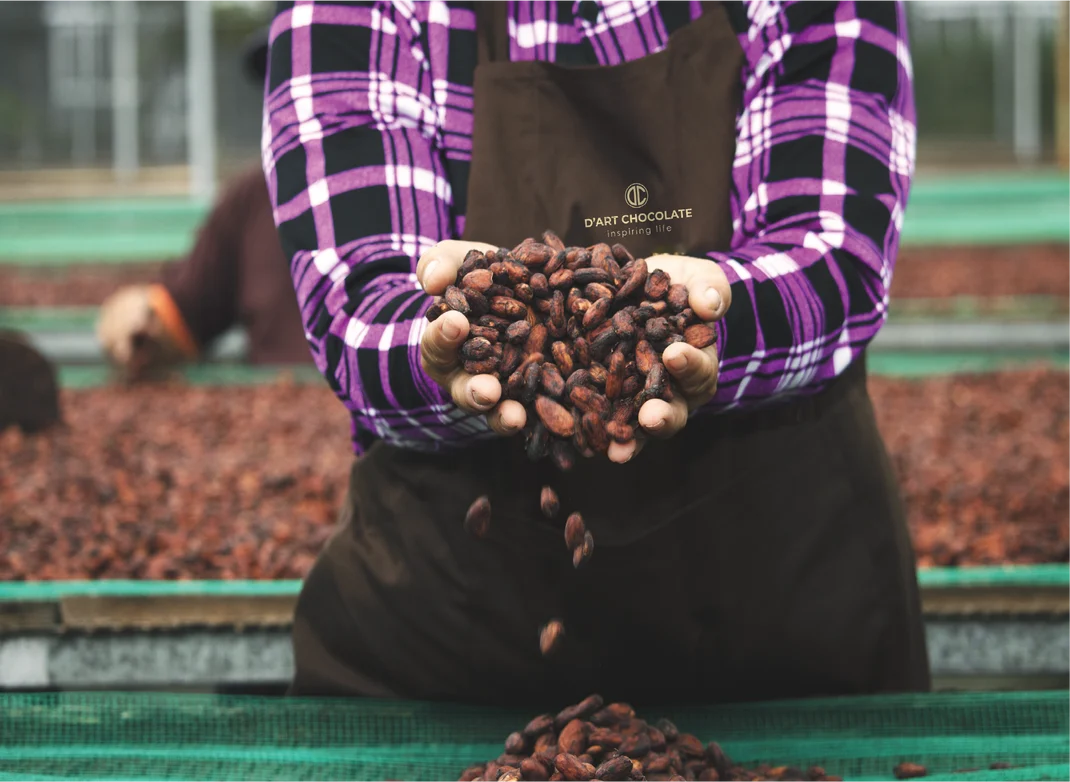
Dried cacao beans poured from cupped hands
3

Roasting

Roasted in small batches to bring out each origin's character without masking it.

Photograph neededthe roaster, or beans going into it
4

Cracking & winnowing

Roasted beans are cracked and winnowed down to pure cacao nibs.

Photograph neededthe winnower, or nibs and husk separated
5

Grinding & conching

Nibs are ground and conched for smoothness — the step that turns nibs into chocolate.

Photograph neededthe melanger or conche running
6

Tempering & moulding

Chocolate is tempered for snap and shine, then moulded into bars and shells.
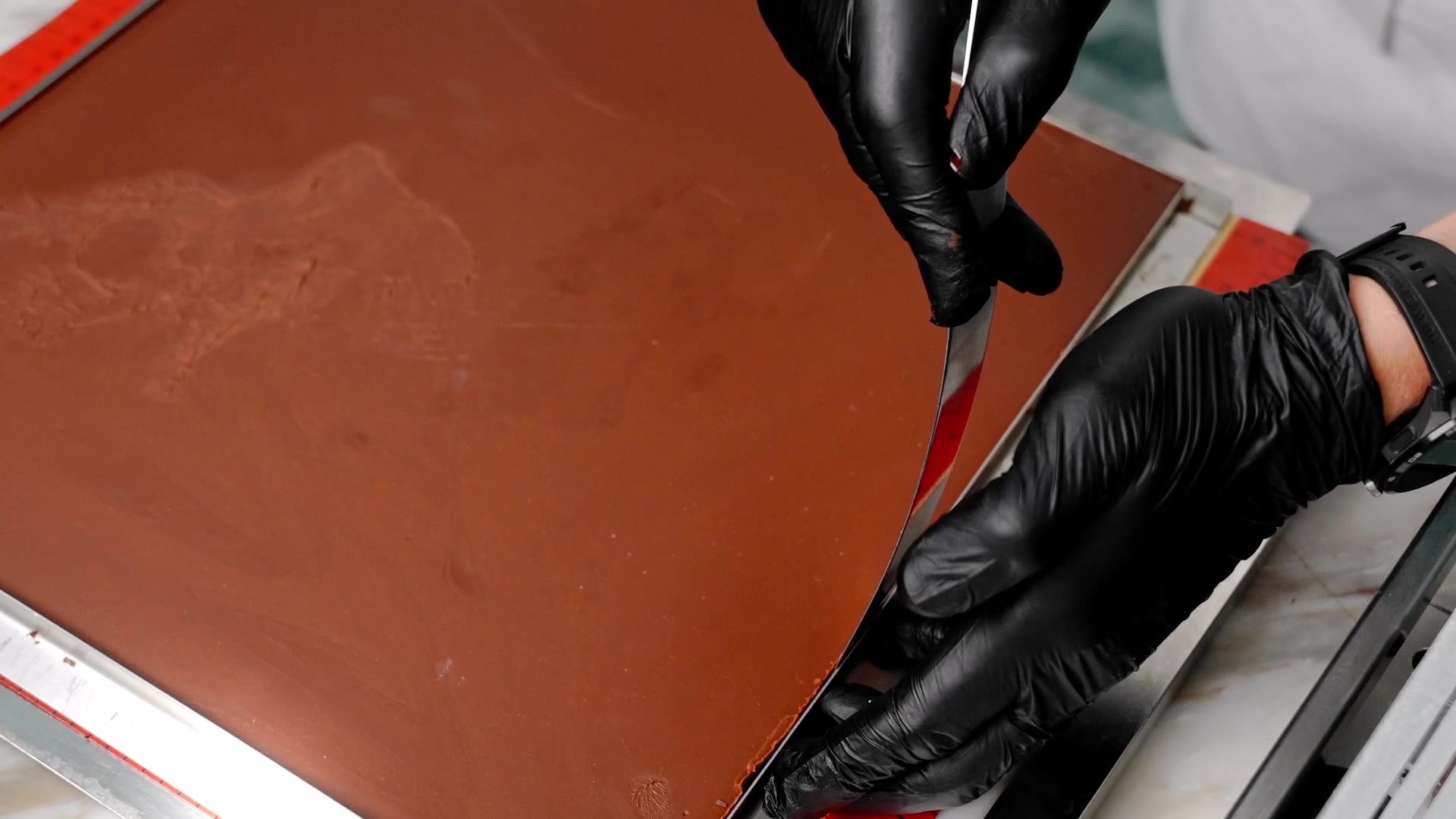
Gloved hands working tempered chocolate on the slab
7

Hand-finishing

Bonbons are hand-painted and boxed at the atelier — the detail that makes a D'art box a D'art box.

Photograph neededa finished hand-painted bonbon, or a box being packed
A closer look

What makes a bonbon difficult

Tempered chocolate draining in long threads from a just-turned bonbon mould
The shellTempered chocolate is cast into a polished mould and turned out, leaving a shell under a millimetre thick. Temper it wrong and it will not release, will not shine, and will not snap.
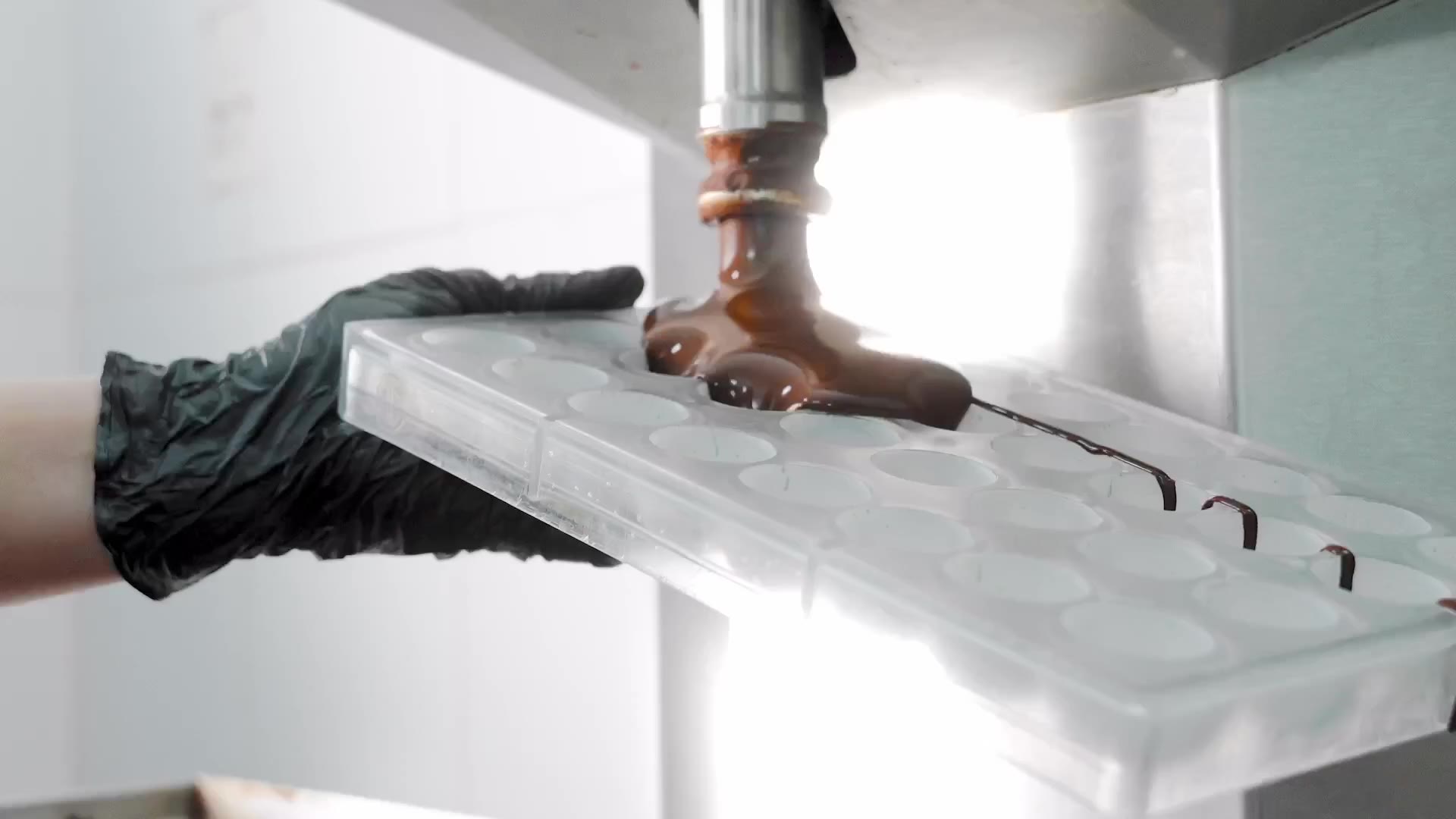
A polycarbonate mould filled under a depositing head
The fillingGanache goes in warm enough to flow and cool enough not to melt the shell it is sitting in. The window is narrow, which is why bonbons are made in small batches.
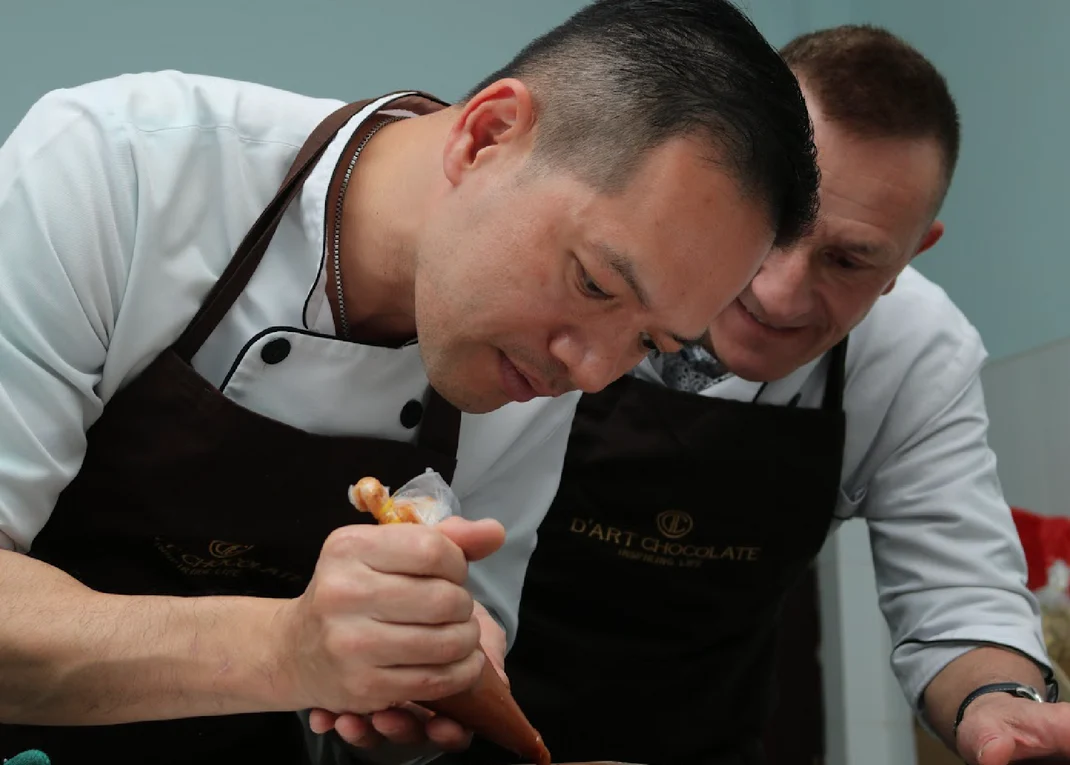
Finishing a bonbon by hand
The finishEvery shell is finished by hand. No two are identical, which is the point — and the reason a box takes as long as it does.

Shell thickness, ganache temperature and batch sizes to confirm with the chocolatier [verify]

See it yourself

Watch the craft up close on a factory tour

Book a Factory TourShop the Bars